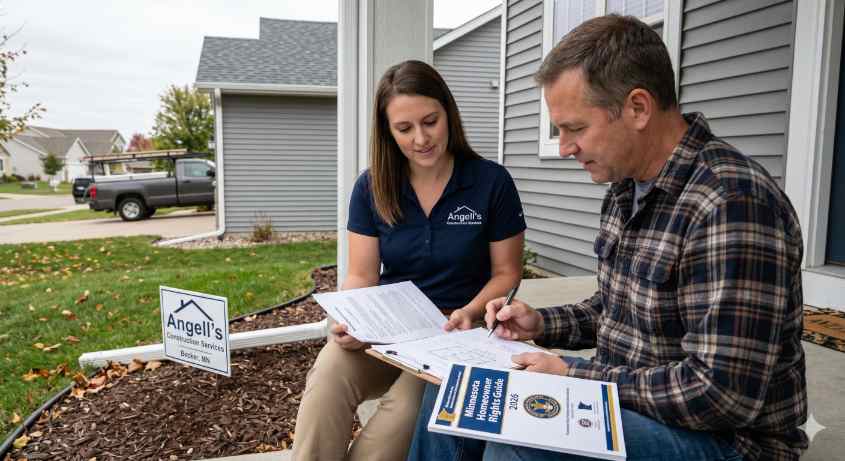
Building a new home or completing a major remodel is a significant investment, but protecting that investment after a storm is becoming increasingly complex. In 2026, Minnesota has introduced updated “Right to Repair” standards and stricter insurance fraud regulations that directly impact how homeowners interact with contractors after a weather event. At Angell’s Construction Services, we prioritize transparency and legal compliance to ensure our clients are protected from “storm chaser” liabilities and insurance claim denials.
Quick Summary: Post-Storm Legal Protections
- Right to Rescind: Minnesota law allows homeowners to cancel a contract within 72 hours if the claim is denied by the insurance company.
- Prohibited Rebates: It is illegal for a contractor to offer to “pay your deductible” or provide a rebate to cover insurance costs.
- Assignment of Benefits (AOB): Homeowners should be wary of signing over their entire insurance claim rights to a third party.
- Licensed Requirement: Only licensed general contractors can legally perform or supervise storm-related structural repairs in Minnesota.
What is the Minnesota “Right to Cancel” law for storm repairs?
Under Minnesota Statute §325G.07, homeowners have a specific window to cancel a contract for goods or services intended to be paid for by insurance proceeds. If your insurance company denies the claim in whole or in part, you have the right to cancel the contract within three business days of receiving the denial notice.
To legally rescind the contract, the homeowner must provide written notice of cancellation to the contractor. At Angell’s Construction, we include this mandatory notice in our standard agreements to ensure our clients understand their rights before any exterior remodeling begins.
Is it legal for a contractor to pay my insurance deductible?
No. In 2026, Minnesota has tightened enforcement against “deductible absorption.” It is a violation of state law for a contractor to offer to pay, waive, or “rebate” a homeowner’s insurance deductible as an incentive to get the job.
Engaging in this practice is considered insurance fraud. If a contractor suggests they can “cover your deductible” by inflating the invoice to the insurance company, the homeowner could be held liable, and the insurance provider may deny the entire claim. We provide fair prices and high-quality work that accurately reflect the cost of materials and labor, ensuring your claim remains legally sound.
How do the 2026 Assignment of Benefits (AOB) rules affect me?
An Assignment of Benefits is a legal document that allows a third party—such as a contractor—to file a claim, make repair decisions, and collect insurance payments directly without your involvement. While this can seem convenient, it strips the homeowner of control over the project.
In 2026, Minnesota homeowners are encouraged to retain their benefit rights. While we work directly with insurance companies to expedite repairs, we do so through a “Direction to Pay” or as a designated representative, ensuring the homeowner remains the final decision-maker on all roofing and structural choices.
What are the risks of hiring an unlicensed Storm Chaser?
After a major hail or wind event, out-of-state contractors often flood Minnesota neighborhoods. These “storm chasers” often lack the necessary state-specific licensing and insurance.
- Liability: If an unlicensed worker is injured on your property, you could be held personally liable for their medical expenses.
- Warranty Issues: Many storm chasers disappear once the “storm season” ends, leaving homeowners with no recourse for leaking windows or faulty siding.
- Permit Violations: Only a licensed Minnesota contractor can pull the necessary permits for storm damage repair. Work done without a permit may have to be removed or redone at the homeowner’s expense to meet 2026 building codes.
How can I verify my contractor’s credentials?
Before signing any contract for new construction or storm repair, verify the following:
- License Look-up: Use the Minnesota Department of Labor and Industry (DLI) website to ensure the license is active and has no recent disciplinary actions.
- Local Office: Verify the contractor has a physical, permanent office in Minnesota (like our location in Becker, MN).
- Insurance Certificates: Request current copies of General Liability and Workers’ Compensation insurance.
Expert Insight: “The biggest red flag in 2026 is a contractor who pressures you to sign an ‘estimate’ or ‘authorization’ before your insurance adjuster has even arrived. A reputable contractor will provide a detailed scope of work and wait for the insurance summary before asking for a financial commitment.” — Angell’s Construction Claims Specialist
Do you have a pending insurance claim for storm damage? Contact Angell’s Construction for a compliant, professional damage assessment that protects your rights.